Your shape is yours to work with.
A shape reading is a shortcut, not an identity. It tells you what tends to land and what tends to fight your line — useful when you're stuck, ignorable when you feel good. Before you go, a few things worth holding onto.
Your shape is mostly out of your hands
A lot of why a body reads the way it does has nothing to do with effort. Estrogen pushes fat storage toward the hips, thighs, and glutes (which is why pear is so common), and the female pelvis is wider than the ribcage by structure. Hourglass is rare because it needs three things to line up at once: a small waist, enough bust, and hips matching the bust within a narrow margin. Apple often emerges later in life as estrogen drops and fat redistributes toward the midsection. Most of your shape is hormones, skeleton, and time, not willpower.
The same is true on the male side. Testosterone pushes fat storage toward the abdomen first, which is why oval becomes more common with age, and the male skeleton sets a wider clavicle-to-pelvis ratio that gives most adult men a mild V by default. A dramatically narrow waist or a deep, athletic taper takes targeted muscle to build, which is why the most romanticized male read is also the rarest.
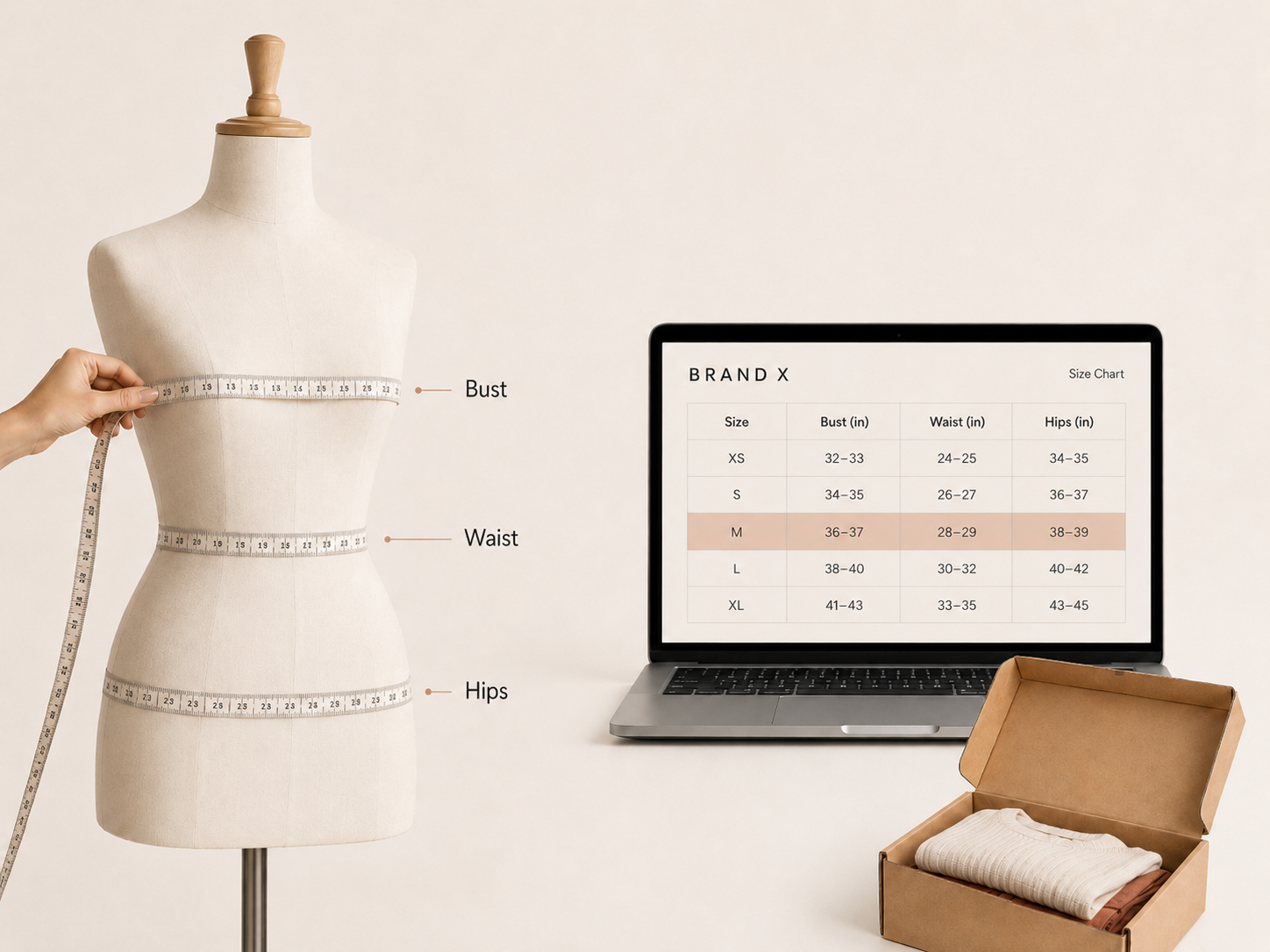
Size charts stop being a mystery
Once your three measurements are saved, online size charts become accurate instead of aspirational. Check the brand's chart against your numbers before you add to cart. Most of the "this arrived and nothing fit" frustration goes away once you've done the measurement routine once.
Can your shape change?
Yes. Bodies change across puberty, pregnancy, weight shifts, muscle gain, and decades. Your skeleton mostly stays put, but where your body carries weight moves around, and that's what usually flips your dominant read.
Work with your body, not against it
The goal of any shape reading is to dress with the body you have, not to fight it into a different one. If this kind of measuring-and-categorizing feels triggering, especially if you live with body dysmorphia, disordered eating, or a complicated history with your reflection, please be gentle with yourself. Skip it, come back to it another day, or stop entirely. None of this is required to get dressed.
If you'd like support, the right people for this are trained for it: a therapist (especially one who works with body image or eating disorders), a registered dietician, and your doctor are the people who can help in ways a styling tool can't. Two highly recommended books are Reclaiming Body Trust by Hillary Kinavey and Dana Sturtevant, which reframes the whole conversation away from fixing and toward listening, and The Body Image Workbook, a structured set of exercises for working through how you see yourself. Mindfulness as a daily practice, even five minutes of breath or a body scan, helps the noise settle enough that any of this is useful.
I may earn a commission through some affiliate links in this module. Please consider using them — they keep the core StyleMeMama tools free and help cover ongoing costs.