The only test that really works is the drape.
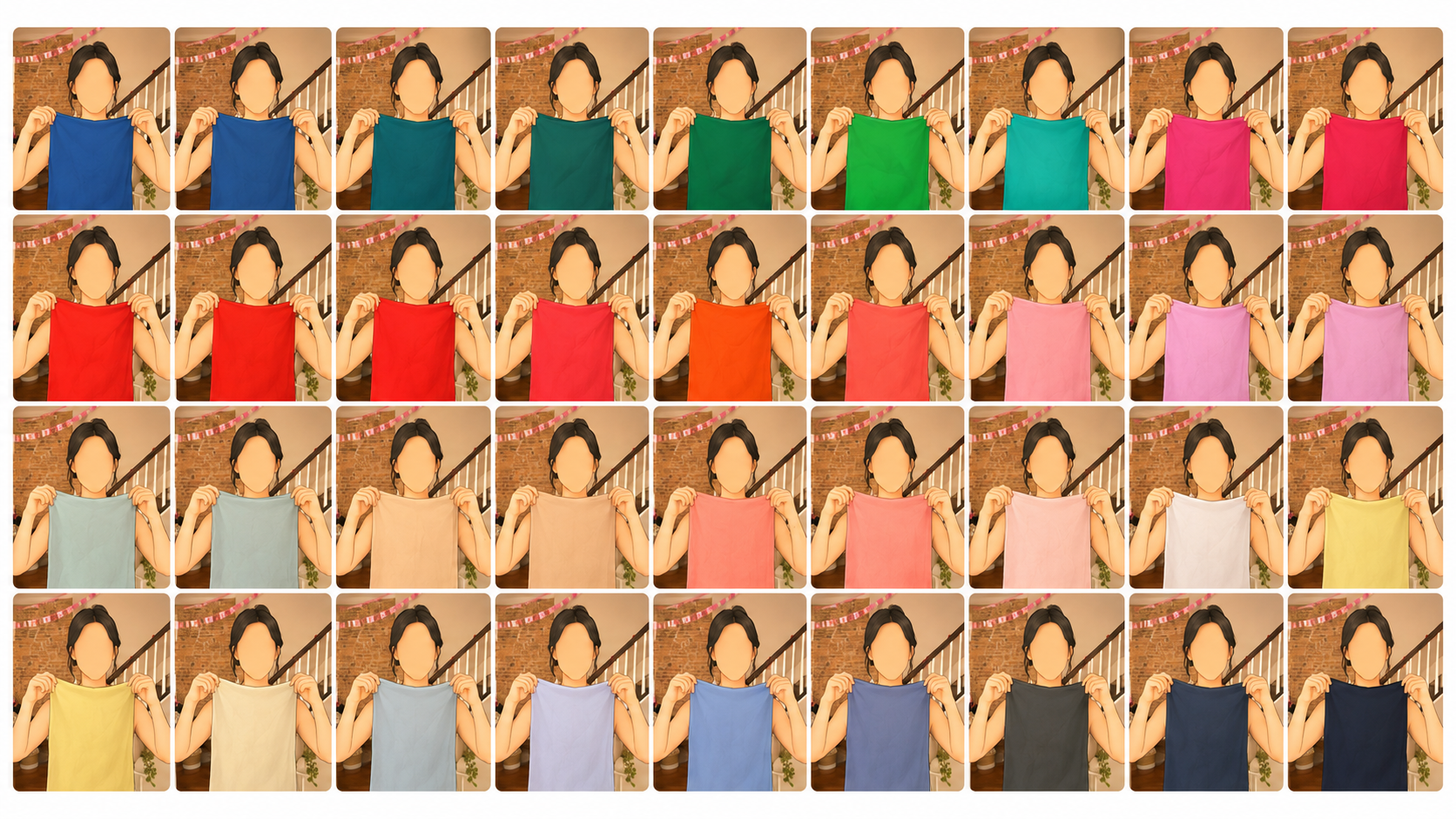
You'll see a lot of shortcut tests online — tan-or-burn, small jewelry, lipstick. Most of them don't hold up. The gold standard is draping: holding carefully chosen pieces of fabric up to your face in controlled light and watching what your skin does.
Why draping is the real answer
A isolates the signal. When a fabric touches the air around your jaw, the colors bouncing back change your skin, your eyes, and the shadow under your chin. Someone trained (or even just a patient friend with a phone camera) can watch your face shift between two drapes and see which one is on your side.
Undertone drapes · cool vs. warm
Four pairs that test cool vs. warm from different angles. The first one usually settles it; the others are there to confirm the same side keeps winning.
Deep blue (cool) beside golden mustard (warm). The strongest undertone signal for most skin tones — usually where the answer becomes obvious.
Fuchsia pink (cool) beside coral orange (warm). A saturated, deliberately exaggerated pair. Good backup when the blue-vs-gold drape reads ambiguous.
Icy blue-white (cool) beside warm buttercream (warm). The differences are smaller than the saturated pairs, especially on fair skin — watch which side keeps the shadow under your jaw clean instead of greenish or muddy.
The classic metallic drape. Silver leans cool, gold leans warm — though some neutral seasons pull off both, so this one's a tiebreaker more than a verdict.
Tests that don't hold up
Vein color. The classic "blue veins = cool, green veins = warm" test is one of the most repeated and least reliable. Veins read different colors depending on skin depth, fat layer, lighting, and the wall thickness of the vein itself — not your seasonal undertone. Plenty of warm seasons have blueish wrist veins, and plenty of cool ones look greenish.
Tan or burn. Tanning is about melanin response to UV — not undertone. There are tan Summers and pale Bright Springs. The old "if you tan, you're warm" rule is one of the fastest ways to mistype yourself.
Small jewelry. A delicate chain or thin ring doesn't cover enough surface area to change what your skin does. If you drape against metallic fabric it can help, but some neutral seasons pull off both gold and silver, so it still isn't a final answer.
Lighting is half the test
Here's the part that trips up most DIY attempts: a drape only tells the truth under full-spectrum light. Professional analysts work under lighting with a color rendering index (CRI) above 90 — effectively a clean copy of daylight — because anything warmer or cooler will tint what the drape is doing to your skin. A warm bathroom bulb will make you look warm-leaning regardless of your actual undertone. Office fluorescents flatten everything. Even your phone camera shifts white balance the moment it detects a face.
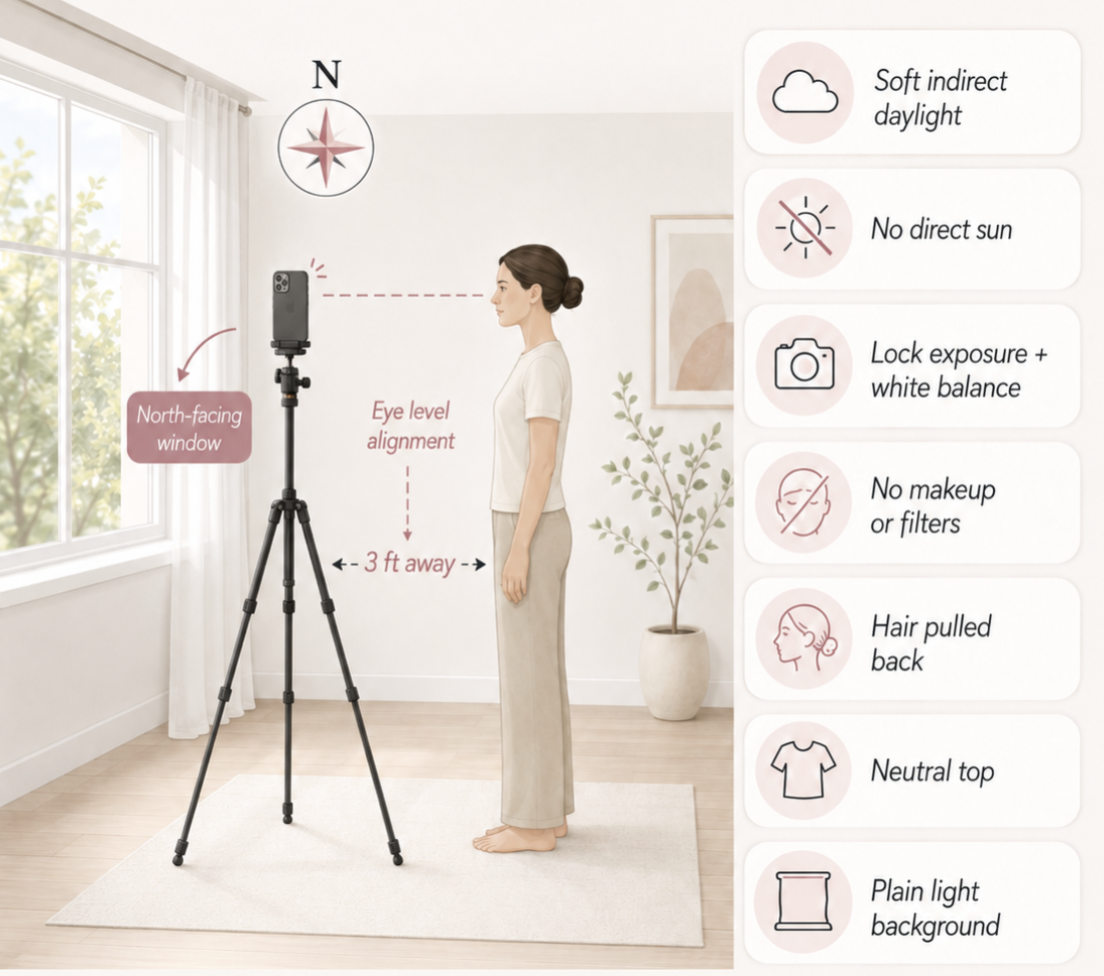
You don't need a lab. What you need is bright, even, indirect daylight — a north- facing window on an overcast day is close to ideal. Take the same photo of each drape from the same spot, with the camera's auto color-correction turned off if your phone lets you. What you're looking for isn't "which color do I like" — it's whether your face looks even and lit under this one versus that one.
Improving your virtual color draping experience
Most online analysts and TikTok filters can't see what they need to see. Photos get color-shifted by camera white balance, filters adjust before you even take the picture, and a lot of apps just sample hex values off your selfie without accounting for your skin's reaction. An in-person draping with someone experienced is still the most accurate option. If you want to DIY, natural daylight, no makeup, clean hair, a simple top, and a full set of controlled drapes will get you most of the way there.
That goes double if you're feeding a photo to any online tool — including ours. The analysis is only as honest as the photo you give it. A bad photo will produce a confident-sounding wrong answer.
I may earn a commission through some affiliate links in this module. Please consider using them — they keep the core StyleMeMama tools free and help cover ongoing costs.